Archives

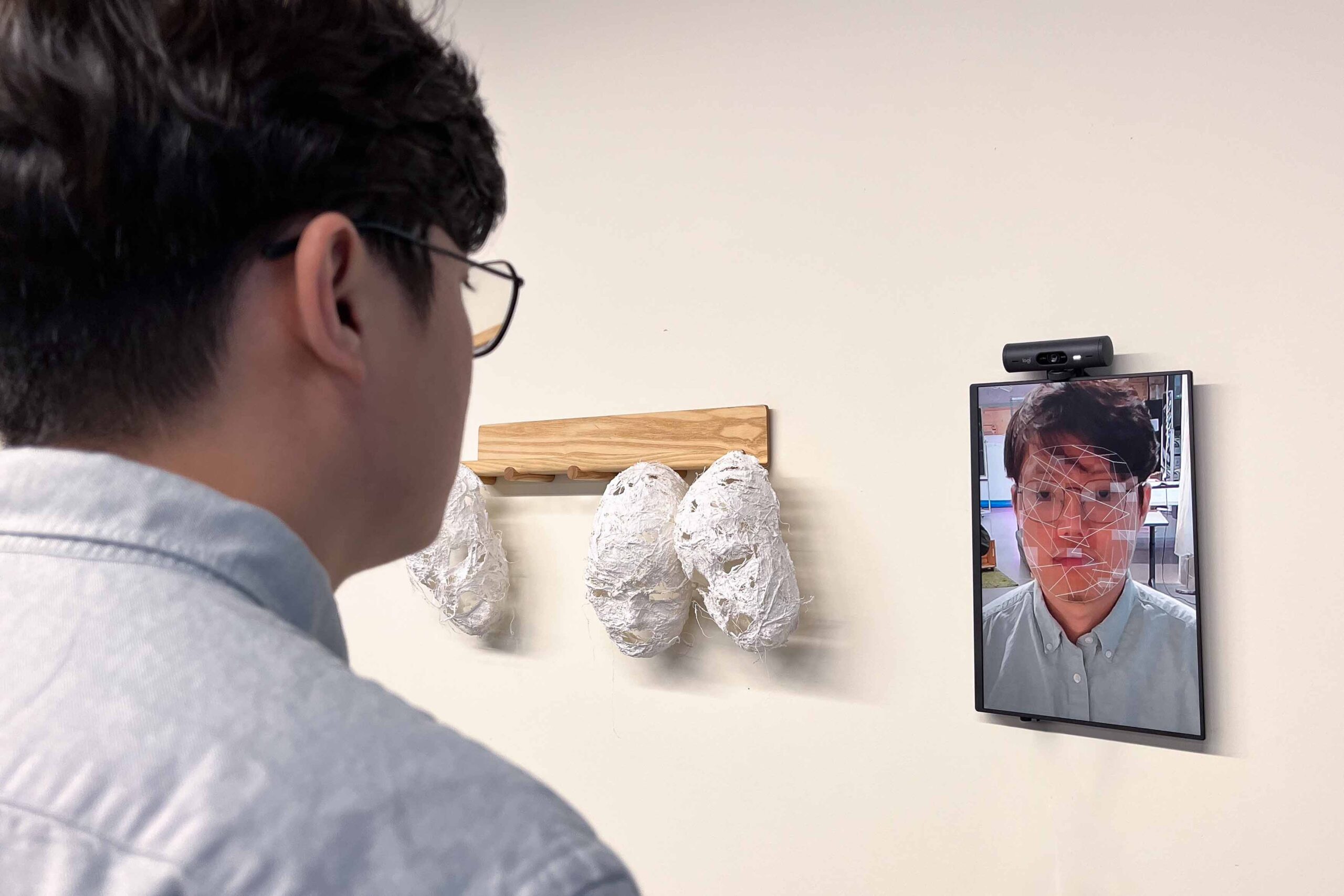
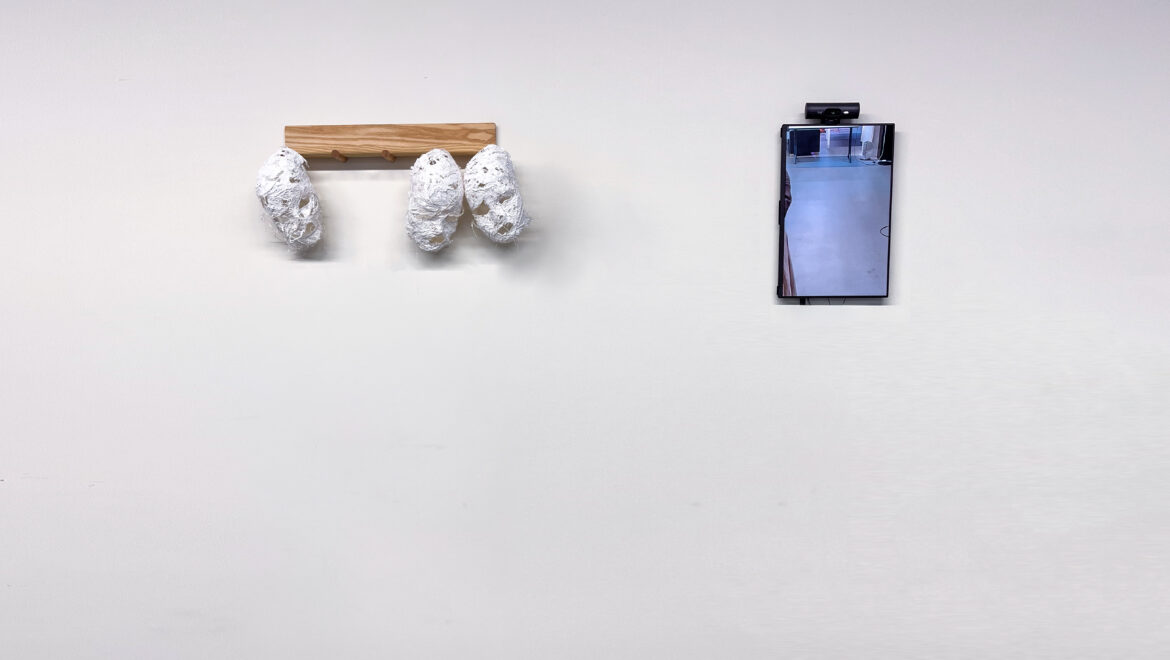
Untitled, 2024

Untitled, 2024

Interactive Installation
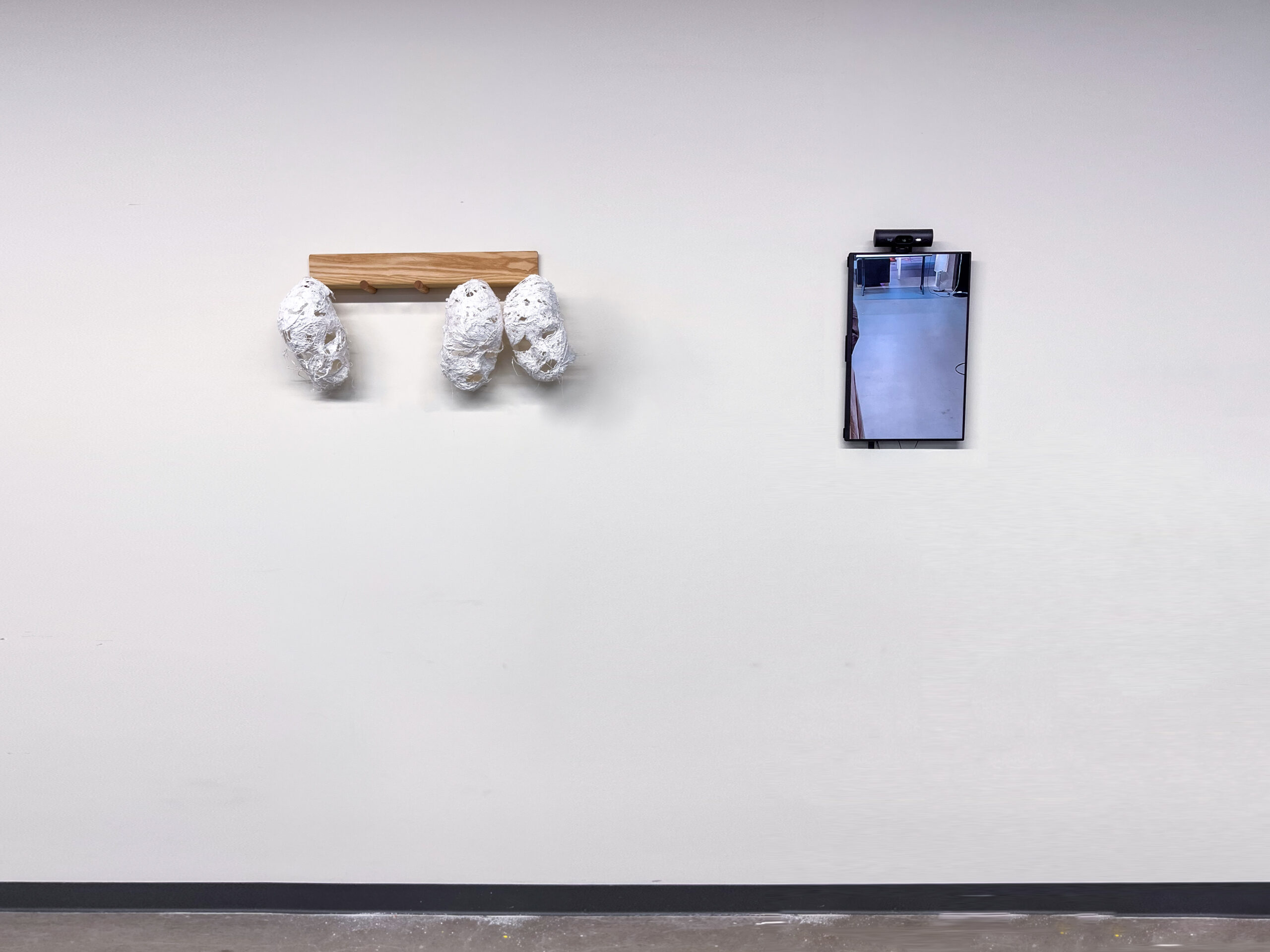
The artwork reveals the mechanisms by which a face is digitally recognized, tracked, and visualized. By utilizing MediaPipe, a Google-developed library, this artwork unveils the systematic recognition of faces, representing them through a mesh of dots and interconnections.

MediaPipe’s claim to “estimate 468 3D face landmarks in real-time” is central to this exploration. By manipulating these landmarks and drawing random connections, the artwork amplifies the process by which human faces are deconstructed and comprehended by technology, prompting contemplation of what constitutes the digital portrayal of oneself. The inclusion of the blurring effect raises important inquiries regarding the importance of human existence within the digital realm when constructing one’s self-image.
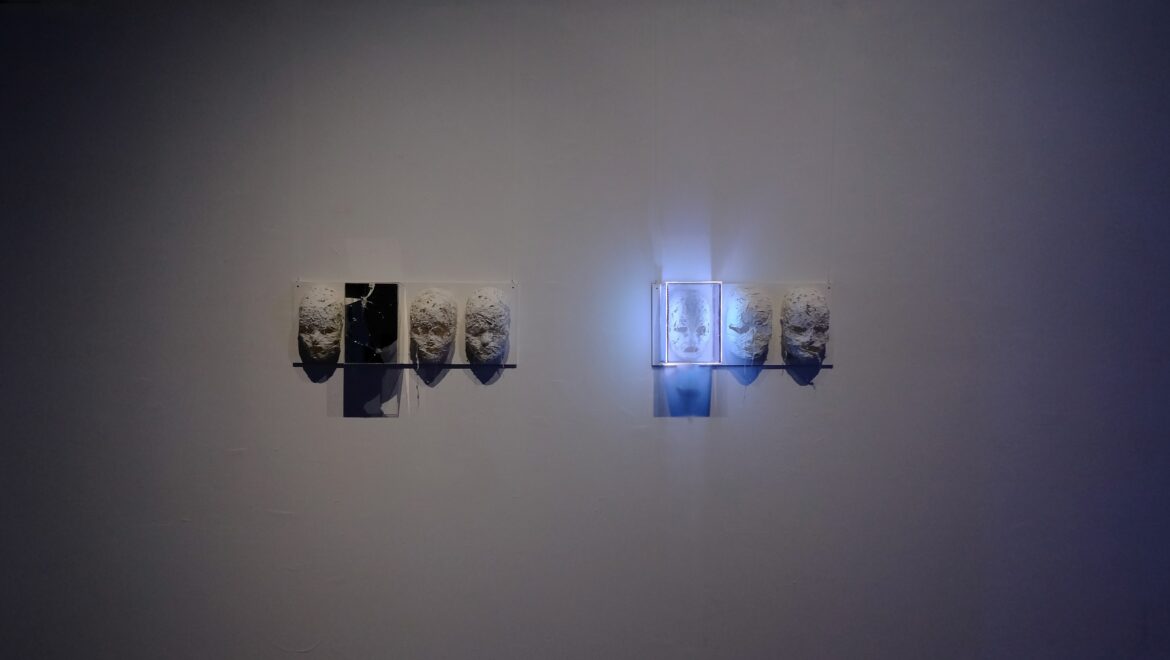
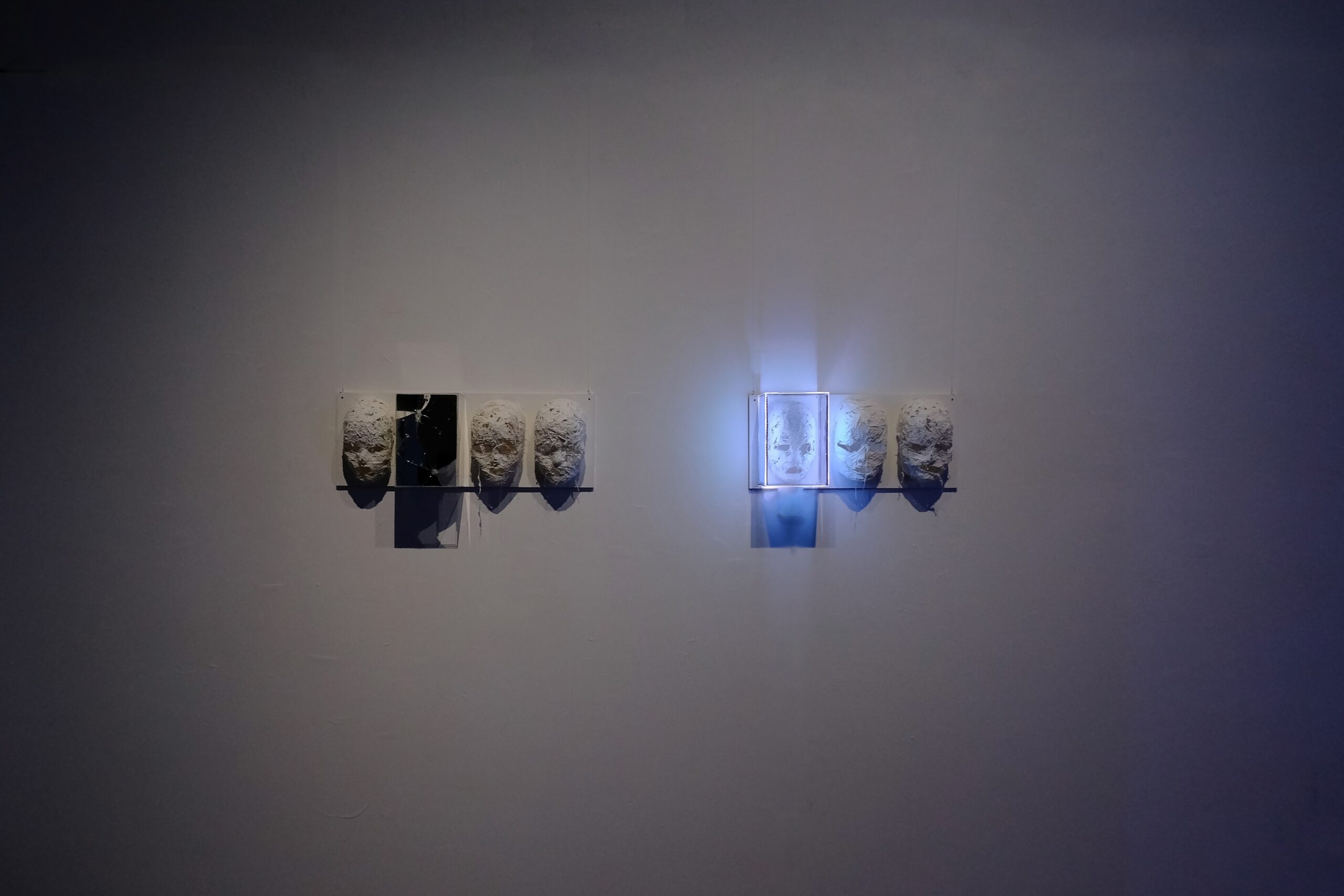
I Choose, I Craft, I Carry, 2023

I Choose, I Craft, I Carry, 2023
我選擇,我塑造,我承載

Interactive Installation

This work explores the depths of selfhood through a set of interactive installations. Fragmented visages, each expressing a myriad of emotions, adorn the wall, provoking introspection on the journey from disarray to clarity. As viewers approach the work, a sensor activates a metamorphosis: the once transparent glass transforms into a mirror, reflecting the viewer’s face and blurring the line between art and reality

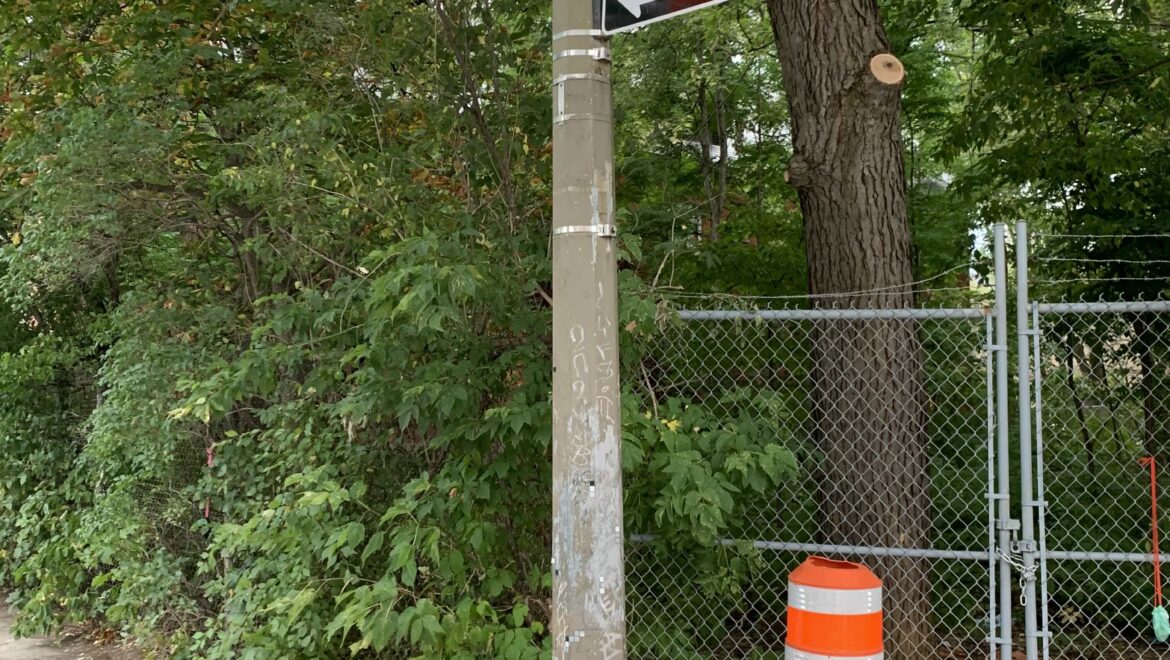
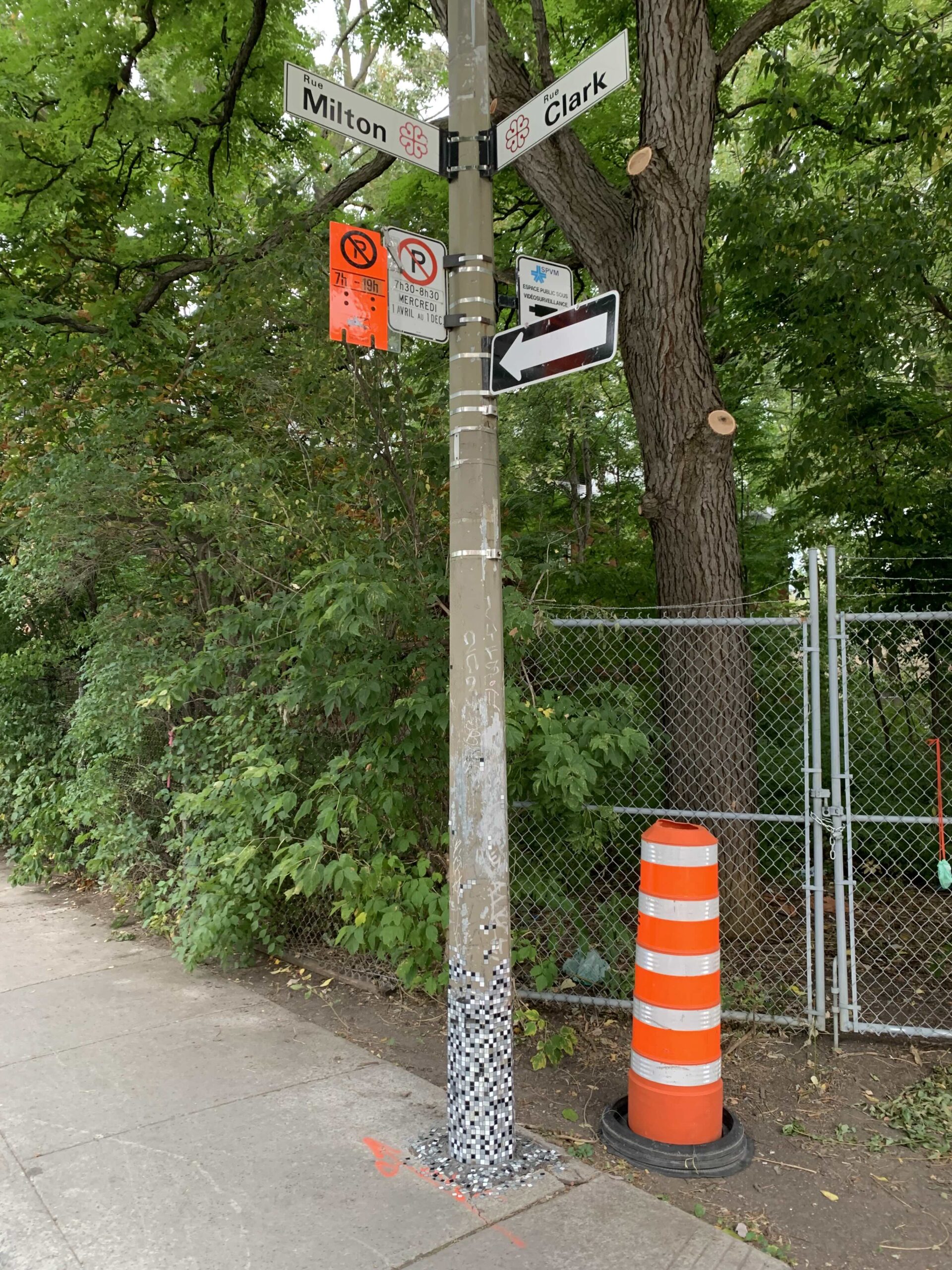
The T[ ] , 2019

The T[   ] ,2019

Installation

Installation, Black, White, Silver tiles on the pole, @ Notman Garden, Montreal, Sep 2019

This is the Information Age; information is flowing and circulating around us in every moment. Thanks to the internet, we can try to learn, search, and seek whatever information we need remotely and instantly. However, let’s think together: when was the last time you saw your surroundings, or nature, by consciously connecting with your senses? Me, I have never touched or seen a pig in my life. The way I know pork is that it comes from a pig, which I only recognize from books, the internet, and from what my mom and teachers told me. This work attempts to deconstruct second-hand information pixel by pixel, urging myself and visitors to directly experience a world with their own sensation.

You ≠ I , 2019

You  ≠  I , 2019

Interactive Installation

Look at ___!
Who are ___ ?

This artwork questions self-image.
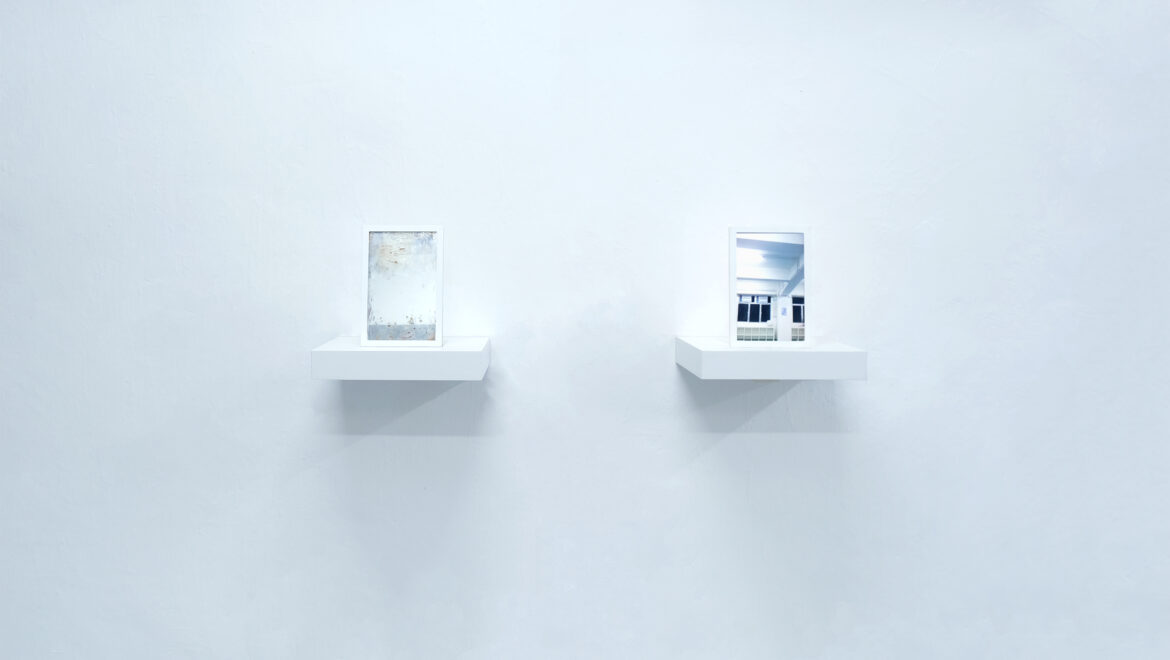
A pool of water, a polished metal like copper or bronze, a piece of glass with mercury amalgam, or a camera with a screen are the ways we use to see ourselves through the ages. Yet, did we ever stop and think about this practice, the habit of seeing the self-images?

Two mirrors are set in this installation. An aged mirror with taupe marks and scratches recalls a perpetual narcissism. Another “mirror” is outfitted with a hidden mini-computer, camera, and screen, which creates an interactive experience to see one’s “authentic” image. However, the closer the viewer comes to this mirror, the more transparent their reflection becomes, reminding us that we cannot see our own face and questioning our visual perceptions.

The digital manifestation of self displayed in the mirror urges the viewer to rethink our primary desire to see a perfect self-image and to contemplate the prevalence of and behavior around selfies—the “perfect” images: we retouch, we edit, and we shuffle the images in social media platforms.

What do you wanna see?

I Mahjong You, 2019

I Mahjong You, 2019

Installation

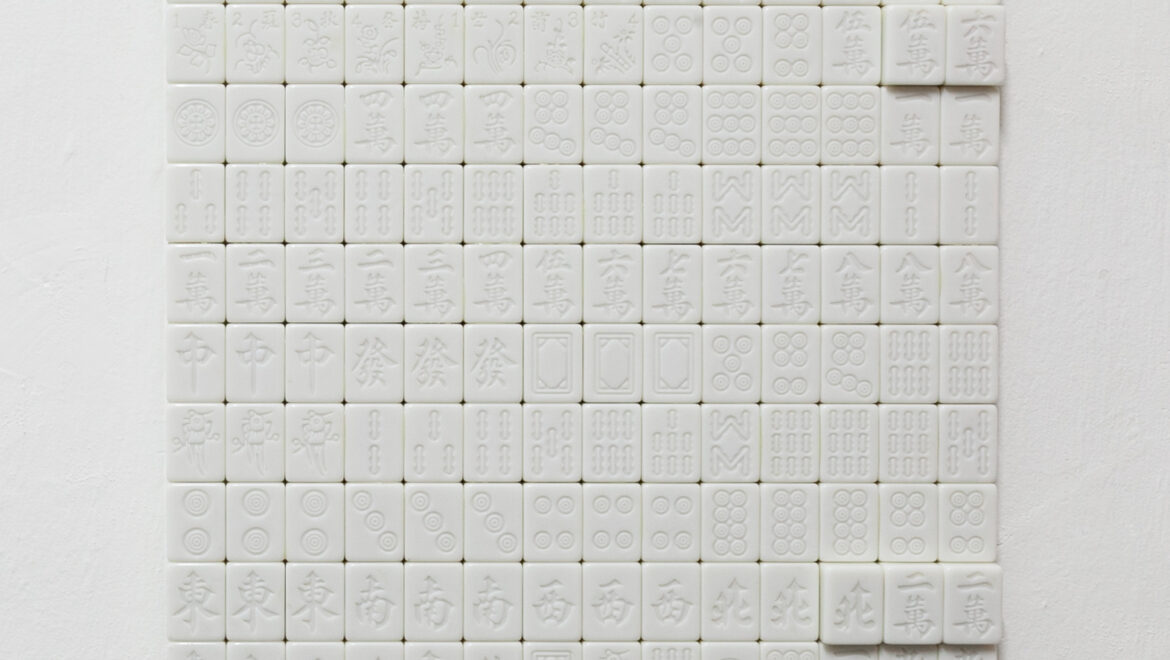
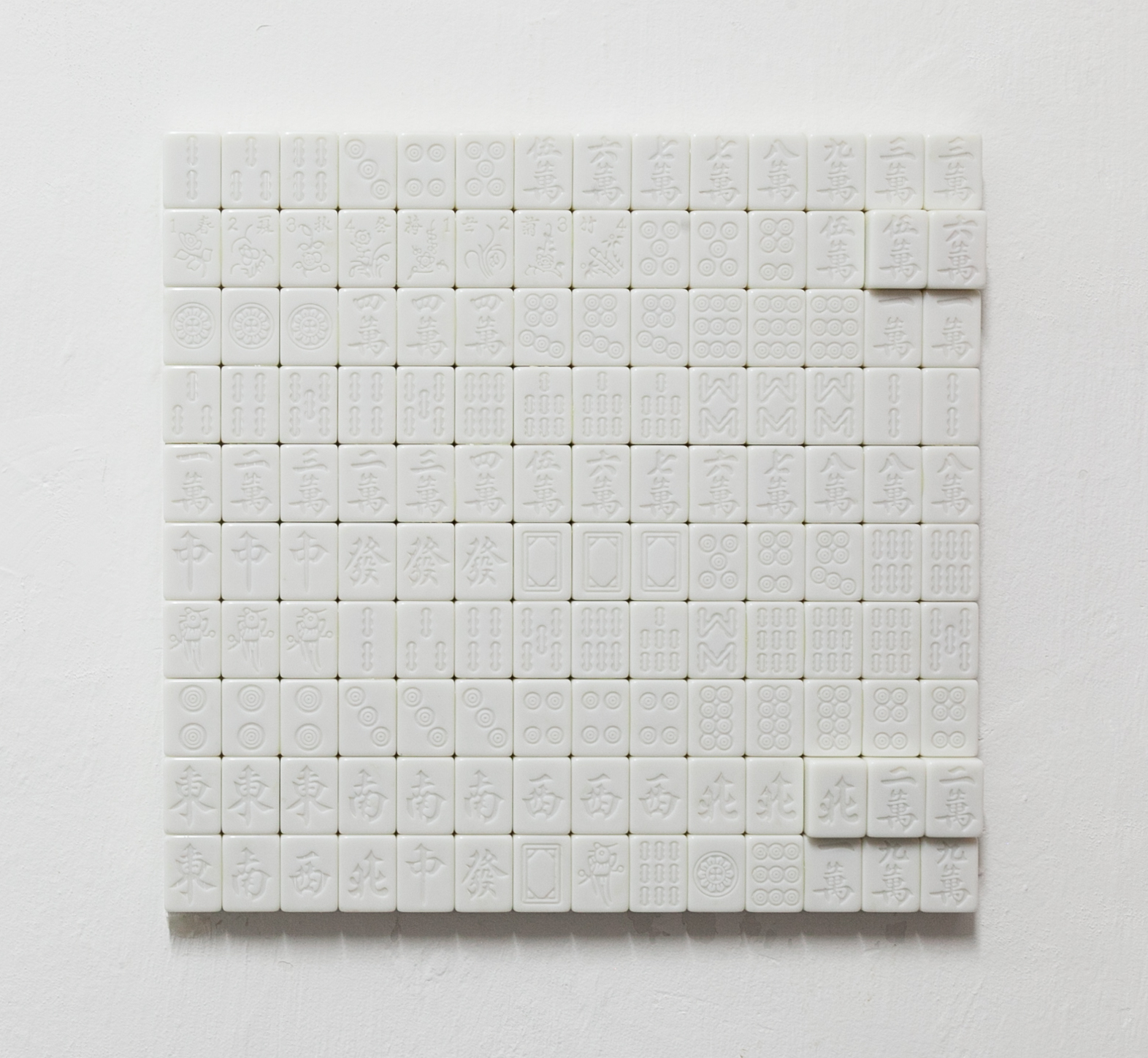
Installation, Colorless Mahjong on Acrylic, 44 cm x 42 cm, Exhibited @ In-situ, Hong Kong, Aug 2019

This artwork has [no] intentions.
This artwork has [no] meaning.
This artwork has [no] stories.

This artwork has an artist.
I chose the object: the Mahjong.
I put and arranged all these objects in place.

The medium itself tell storie(s).
The object itself tell storie(s).
This artwork has audiences.

You are watching it.
You are judging.
You are thinking what the fxxx is this piece presenting.

This work explores the semiotics of an installation.

If the ways of linguistic communication of human are language and sign, and the ways of communication through music are note and frequency, then the ways of communication through an installation could be its presentation (visual or/and audio). The medium(s), the object(s) and the arrangement, form meanings and stories.

Choosing the Mahjong tiles as the object in this art piece based on only its rich cultural ties to Hong Kong, a familiar object that I believe every Hong Kong person knows, this work aims to remove any implication of anything personal, social, or cultural. Masking the Mahjong tiles by erasing all its color is asking how an object’s representation tells its stories and what the contribution of an artist does in an (art)work.

MyDiary, 2019

MyDiary, 2019

Installation

Displayed on 23-25 Apr 2019 @ Building 21, Mcgill

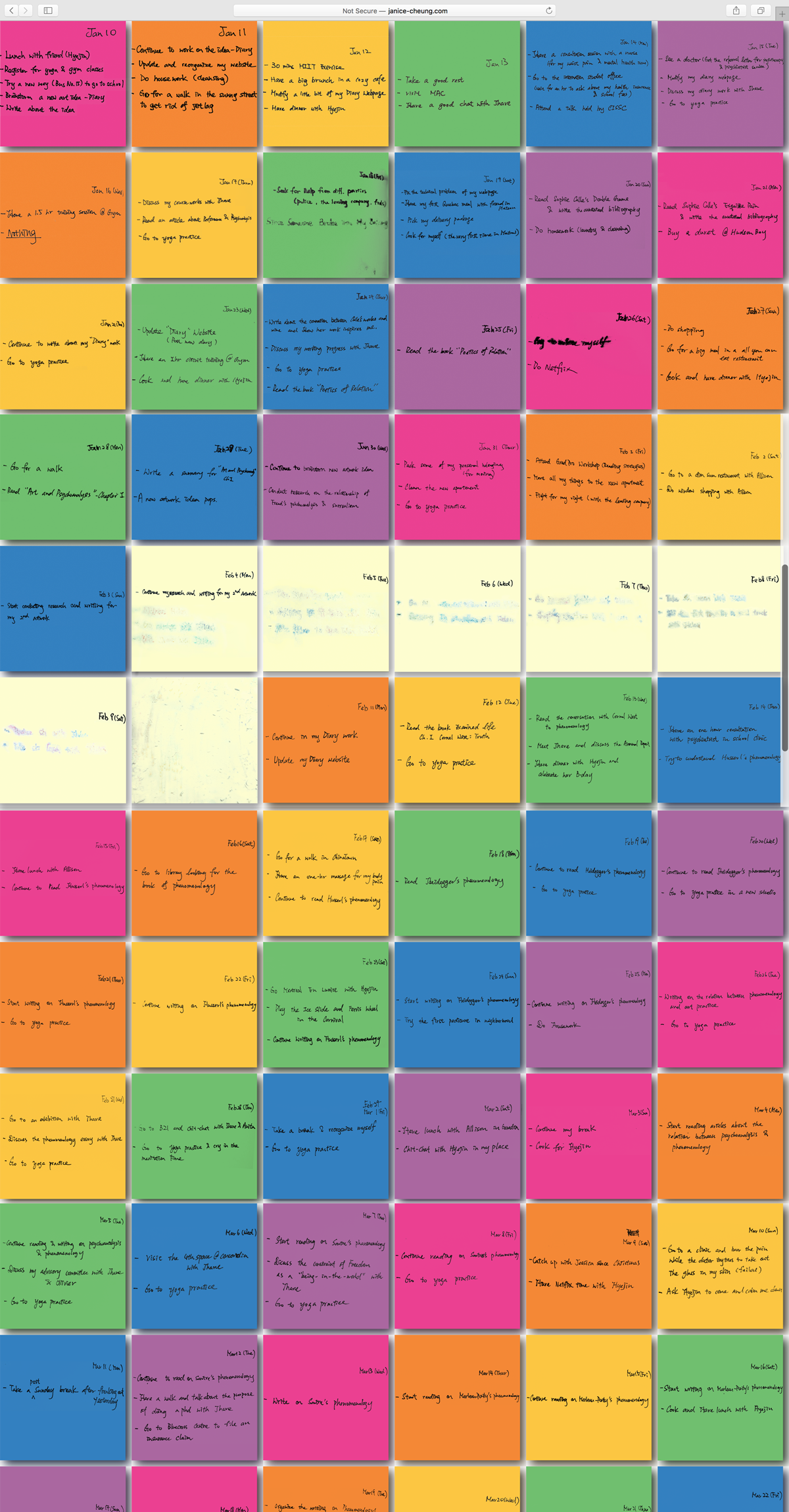
Disclosure. Erasure: non-disclosure.
The gesture of erasure as an emotional indicator.
That is all the information about the emotional content given to the reader.
The Diary is a form of masking, a procedure for revealing and selectively concealing.

The self is masked.
The self is performed.
The self is either rejected or accepted.

Erasing intimacy.
Retaining banality.
The safe path of the self.


We live; we are certainly ALIVE.
Most of us have a usual routine every day.

And I believe most people:

Metro boulot dodo,
Wake up, Eat, Work,
Sleep and then Wake up again, etc…

A loop, a routine that we can’t or somehow we refuse to break.

One day after another,
Suddenly, Sometimes, One day,
Questions about the meaning of our lives, our past, our now, and our future come.

A sense of loss, anxiety, unsatisfactory, deficiency, and rebellion pops up.
None of us know what we are doing, what we are fighting for,
What a human being is supposed to do in this world.

Sleep and then Wake up…
Then the following day, do the usual routine.
We struggle, we fight, and we
Sleep and then Wake up…

Interactive Installation, Exhibited at "I am … Exhibition", Building 21, McGill, Apr 2019

I Am Dead But I See My Existence, 2019

I Am Dead But I See My Existence, 2019

Interactive Installation

Interactive Installation, Exhibited at "I am … Exhibition", Building 21, McGill, Apr 2019

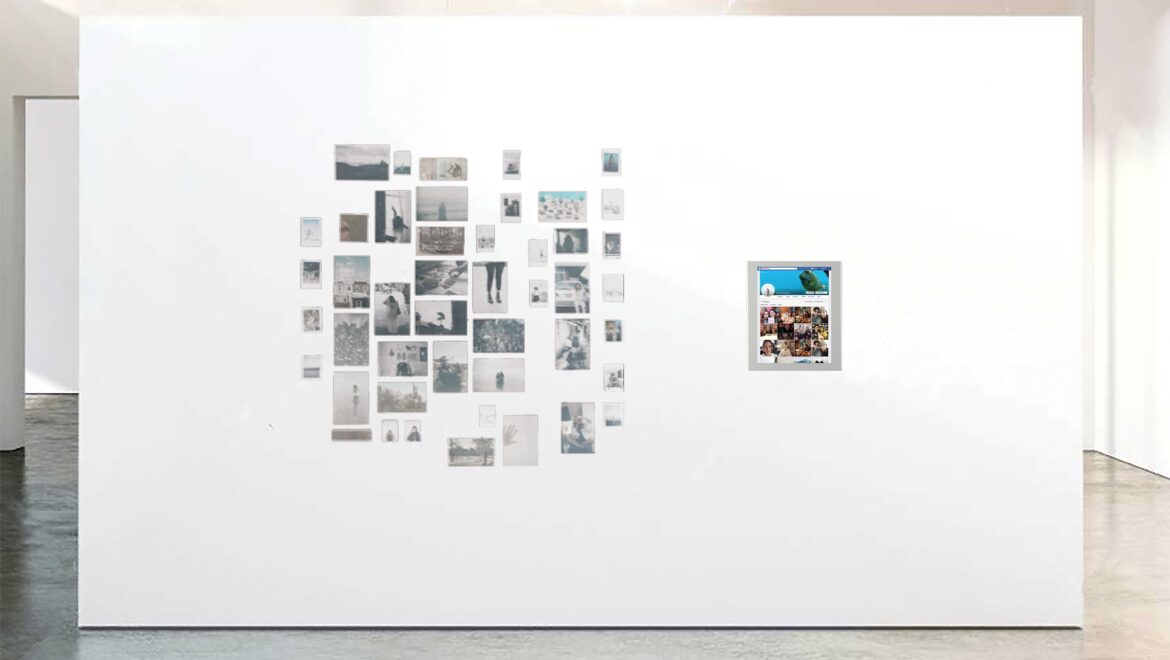
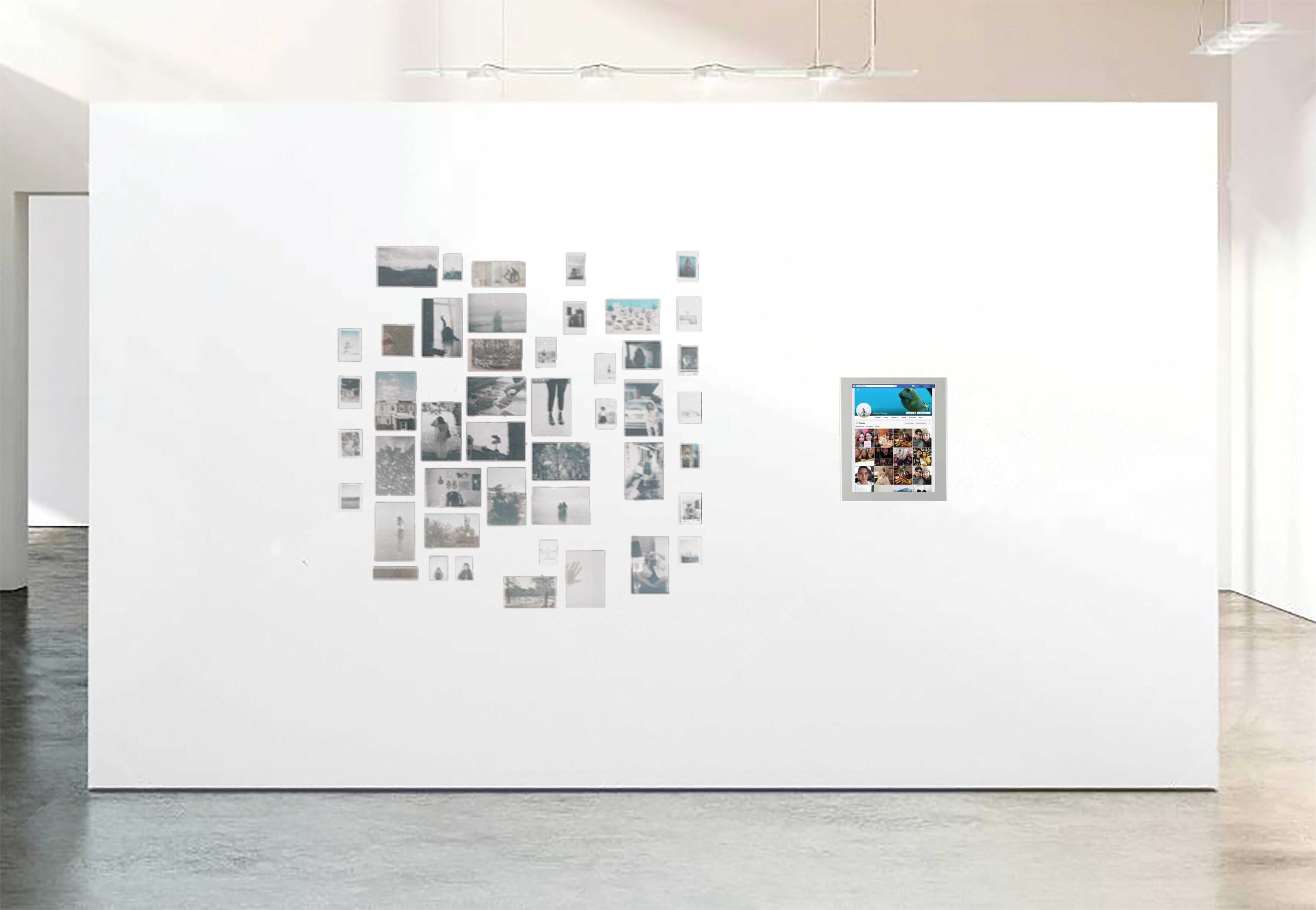
This artwork attempts to show the alienation of my online self by employing Erving Goffman’s notion of dramaturgy: photos on the wall with the random masking wearing off effect compared to the high resolution of the same photos showing on the iPad.

I remember every time when my parents took out their photos, telling me their stories; we immediately had a journey to the past, and I could still feel those stories were so alive even though those photos were in black and white or some parts were even washed out. Those photos really did their jobs to record every precious moment.

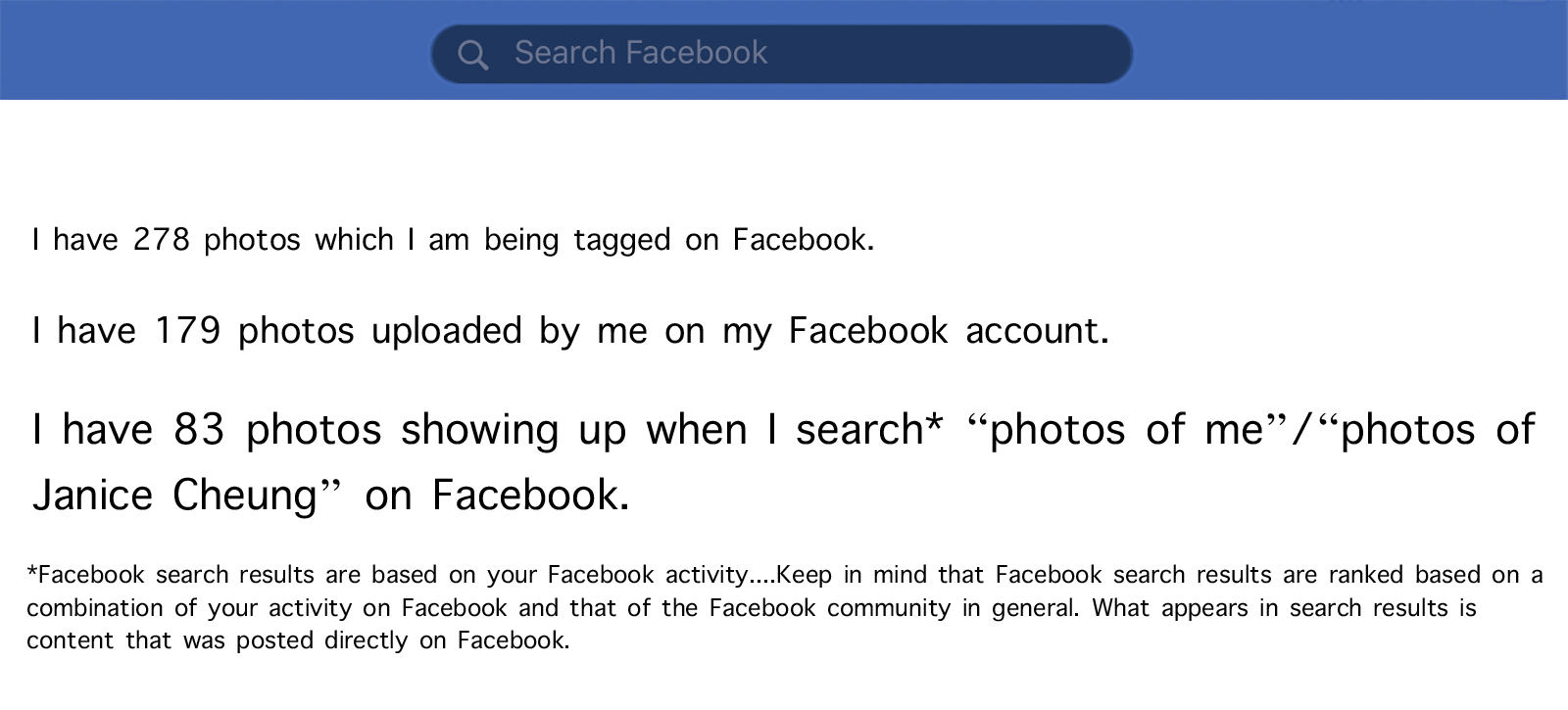
However, when I am looking at my Facebook photos, I feel I am so separate from the “me” showing in those photos. I can see myself; I can recognize myself in the photos. BUT, it doesn’t construct for me a feeling that I literally existed at those moments.

The Looker, 2015

The Looker, 2015

Interactive Installation

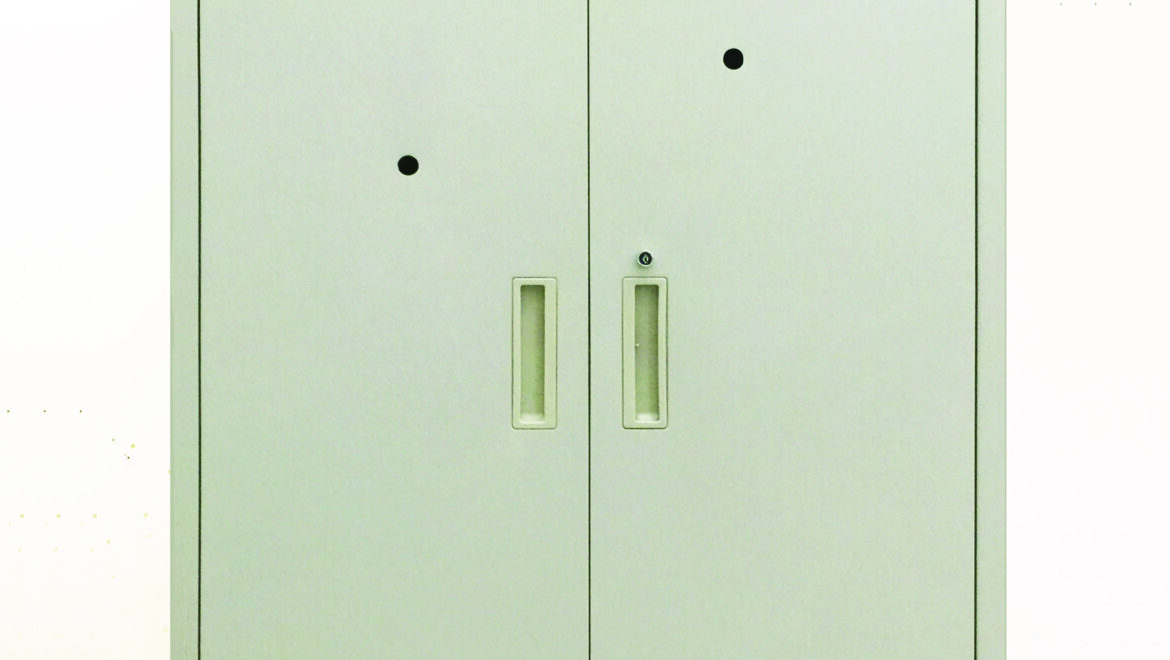
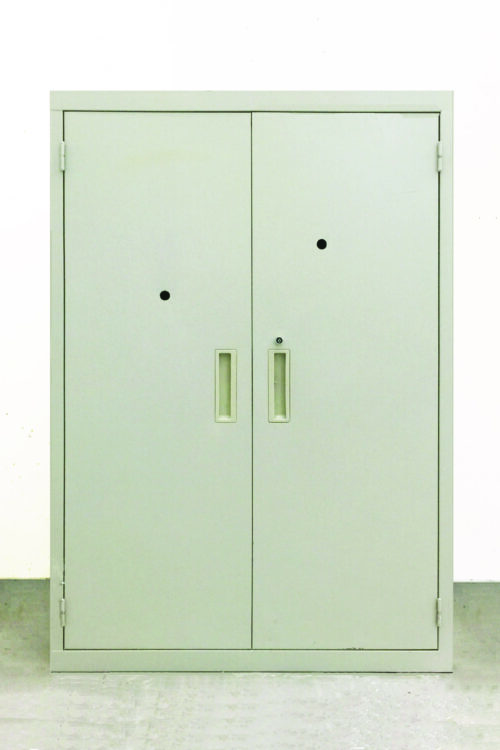
Installation (2015), Metal storage locker, Projector, Arduino, Light sensitive sensors, 1.2m x 1.5m x 1m.

This work tries to address the psychic distance between an artwork and spectator. I seek to minimize the psychic distance and build up a close connection between an artwork and a spectator and observe how psychic distance affects the spectator’s aesthetic experience.

Psychic distance is a kind of immaterial distance between two subjects or objects that cannot be measured and controlled. Edward Bulloughm, an English aesthetician and scholar of modern languages, has stated that psychical distance has a strong effect on aesthetic experience with an artwork in the essay “Psychical Distance as a Factor in Art and an Aesthetic Principle.”

This installation consisted of different eye movement videos projected inside the metal storage locker. When a spectator looks through the hole, sensors would be triggered, and the eye focus (projection) would be changed to the direction of the hole, which creates eye contact with the spectator. The immediate response to the spectator with the eye contact in order to build up a tight connection to the spectator, which decreases the psychic distance between an artwork and spectator. Moreover, it addresses the issue that the spectator in the exhibition area is not the only subject watching the works; they could also be the objects that are being observed.

Sponge Head, 2014

Sponge Head, 2014

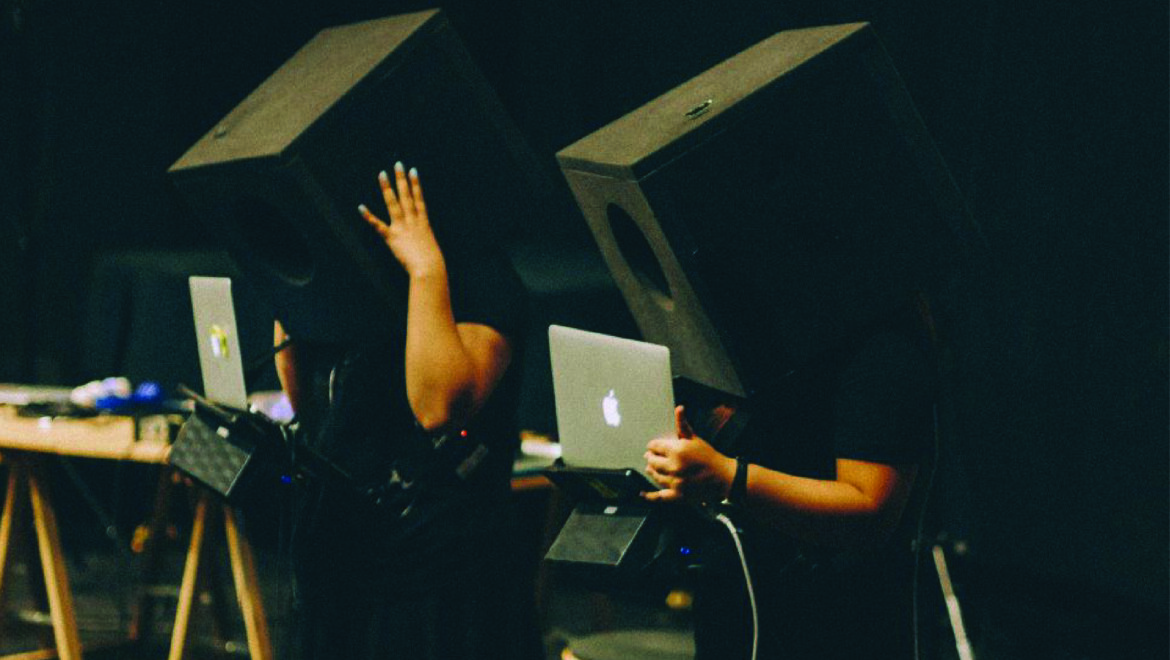
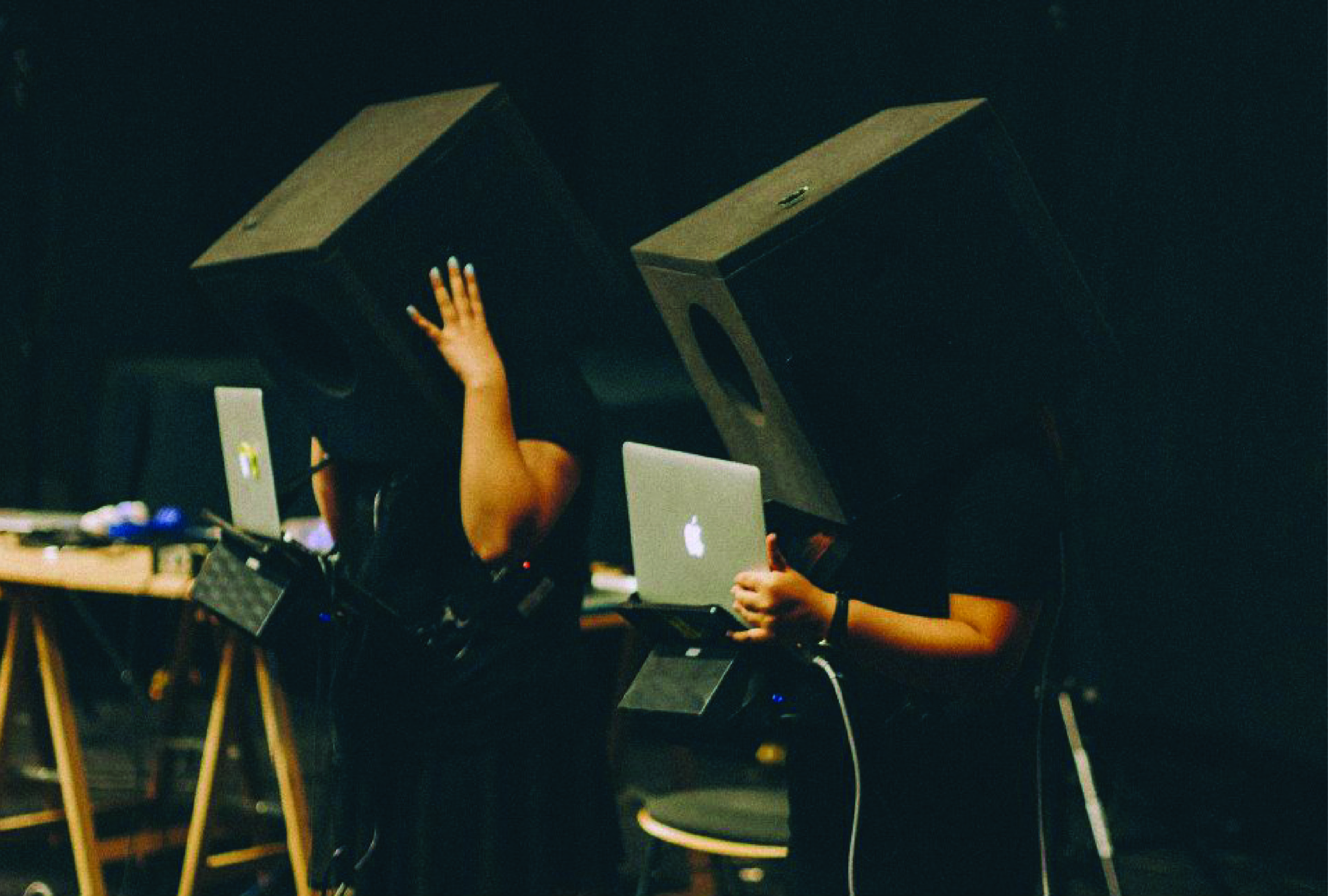
Technology-enabled Musical Interfaces (Co-developed with Emily Ng Yi Ting)

The Musical Interfaces is designed for street performance, which made by several flex sensors and accelerometers. We encourage people to play music with us by squashing and shaking our head.

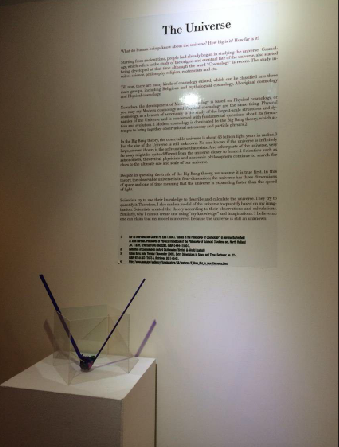
The Universe, 2014

The Universe, 2014

Installation

The work attempts to criticize how science destroys one’s imagination of the living world and the universe.

People tend to believe science is always the truth in explaining everything. Scientists work hard in exploring the formation and the shape of the universe and formulating equations and laws in explaining our living world and our universe.

But is this the only way to explain our world and the universe? Or are there any other ways people could understand our world? Therefore, the artist tries to build a model of the universe based on only her imagination.